Product Launch
Introducing Aquapelle: Premium Waterborne Microfiber Leather
Aquapelle combines a Nappa-inspired touch, durable four-layer construction, cleaner waterborne chemistry, and repeatable quality for automotive, interior, and lifestyle surfaces.
12 August 2026
CAMARI introduces Aquapelle, a premium waterborne microfiber leather developed for surfaces where refined touch, durable performance, and reliable production must work together. Its three-dimensional microfiber architecture creates a soft, full, Nappa-inspired hand, while controlled colour, thickness, and grain support consistent results from sample development through volume production.
01
A Three-Dimensional Microfiber Foundation
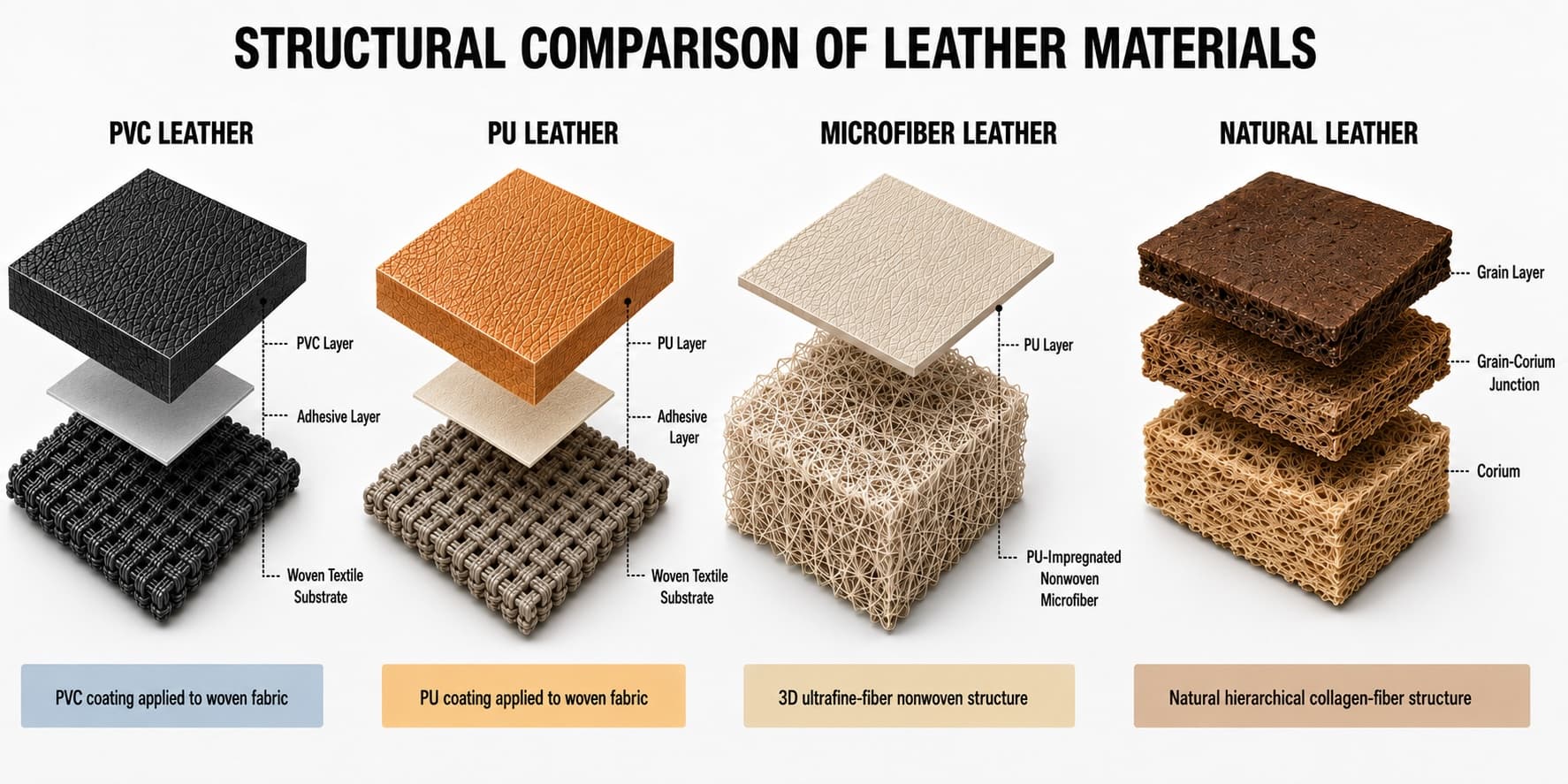
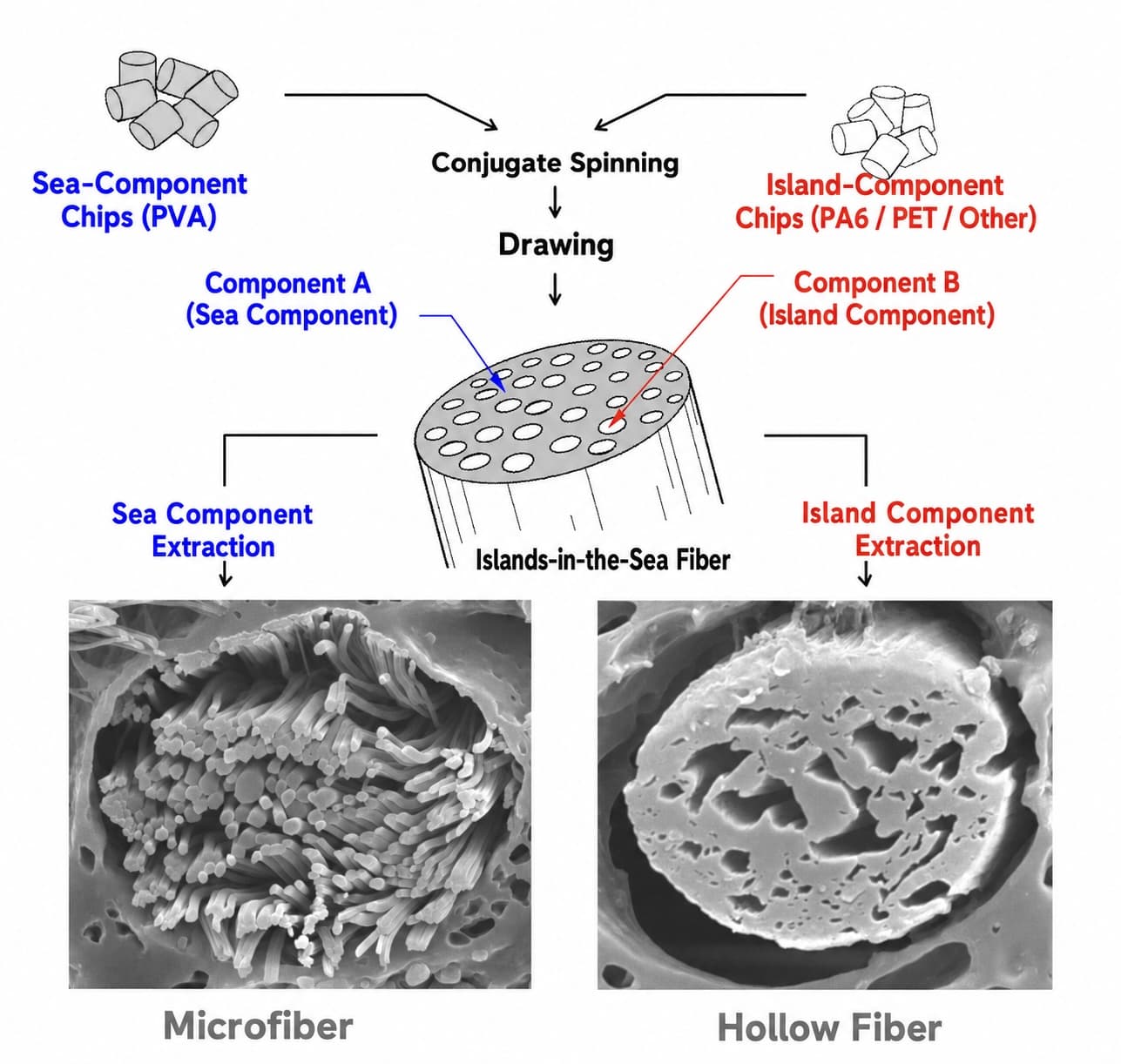
Unlike coated woven constructions, microfiber leather is built on a dense three-dimensional network of ultrafine nonwoven fibres. An islands-in-the-sea spinning process forms composite fibres; removing the surrounding sea component separates the island components into extremely fine filaments. This architecture gives Aquapelle its balance of softness, structural strength, dimensional stability, and breathable comfort.
02
A Cleaner Waterborne Route
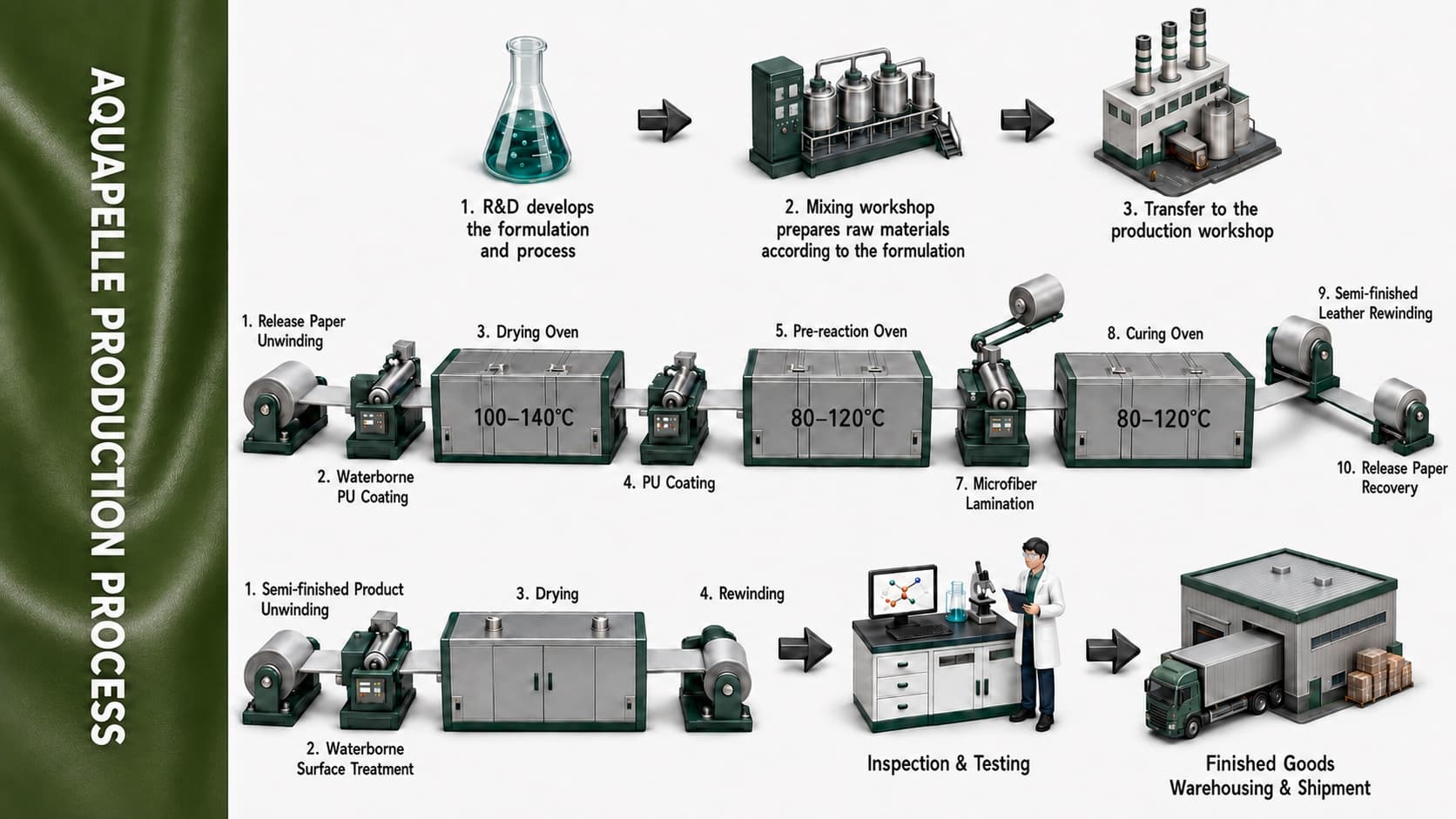
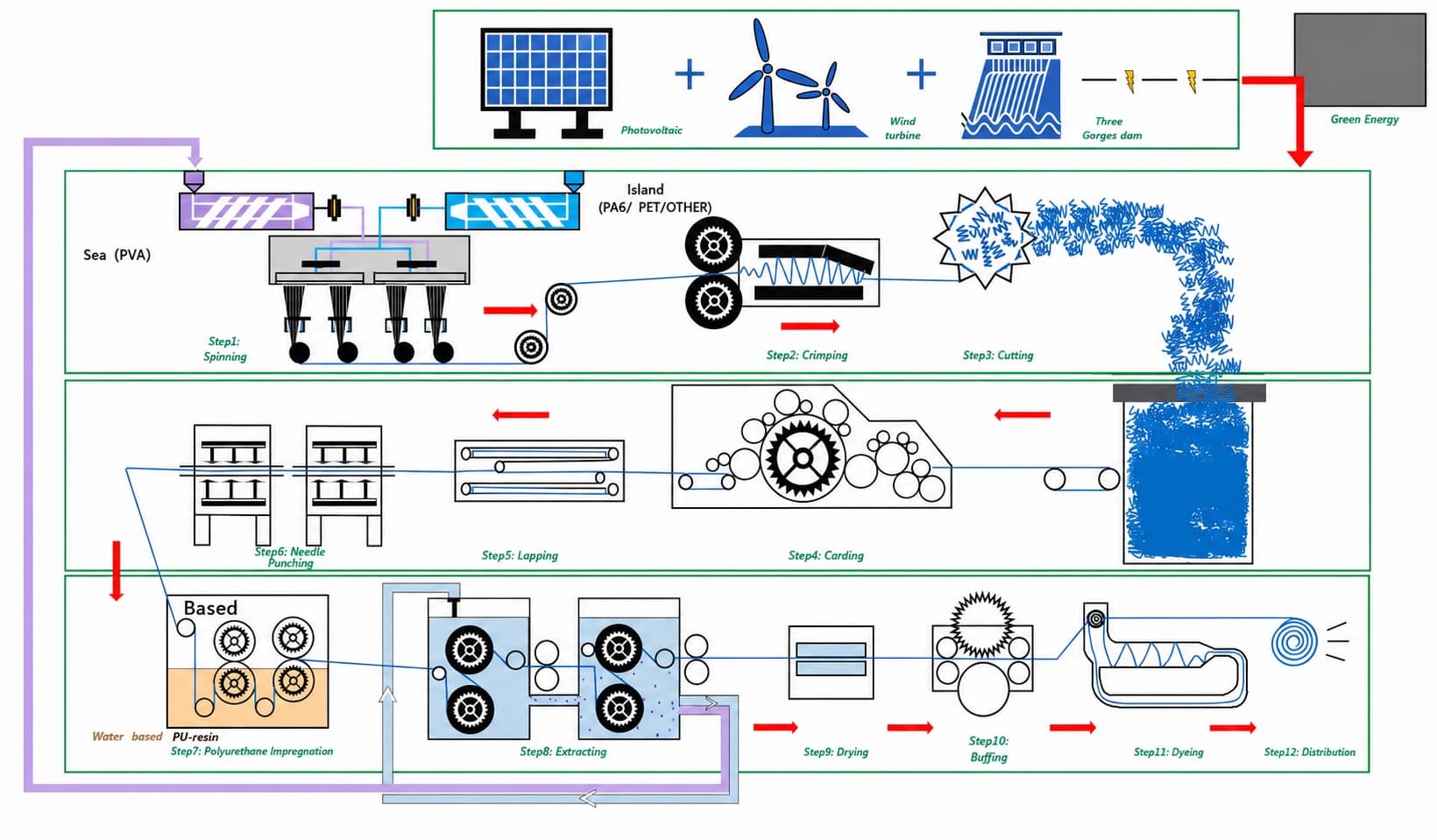
Cleaner chemistry is central to the platform. The water-based fibre-opening route avoids traditional toluene or sodium-hydroxide processing, while waterborne PU impregnation and solvent-free PU technologies reduce reliance on organic solvents and help lower VOC emissions. A closed-loop process recovers PVA and water, supporting lower wastewater and a reduced manufacturing footprint compared with conventional solvent-based production.
03
Four Layers, Tailored for Real Applications
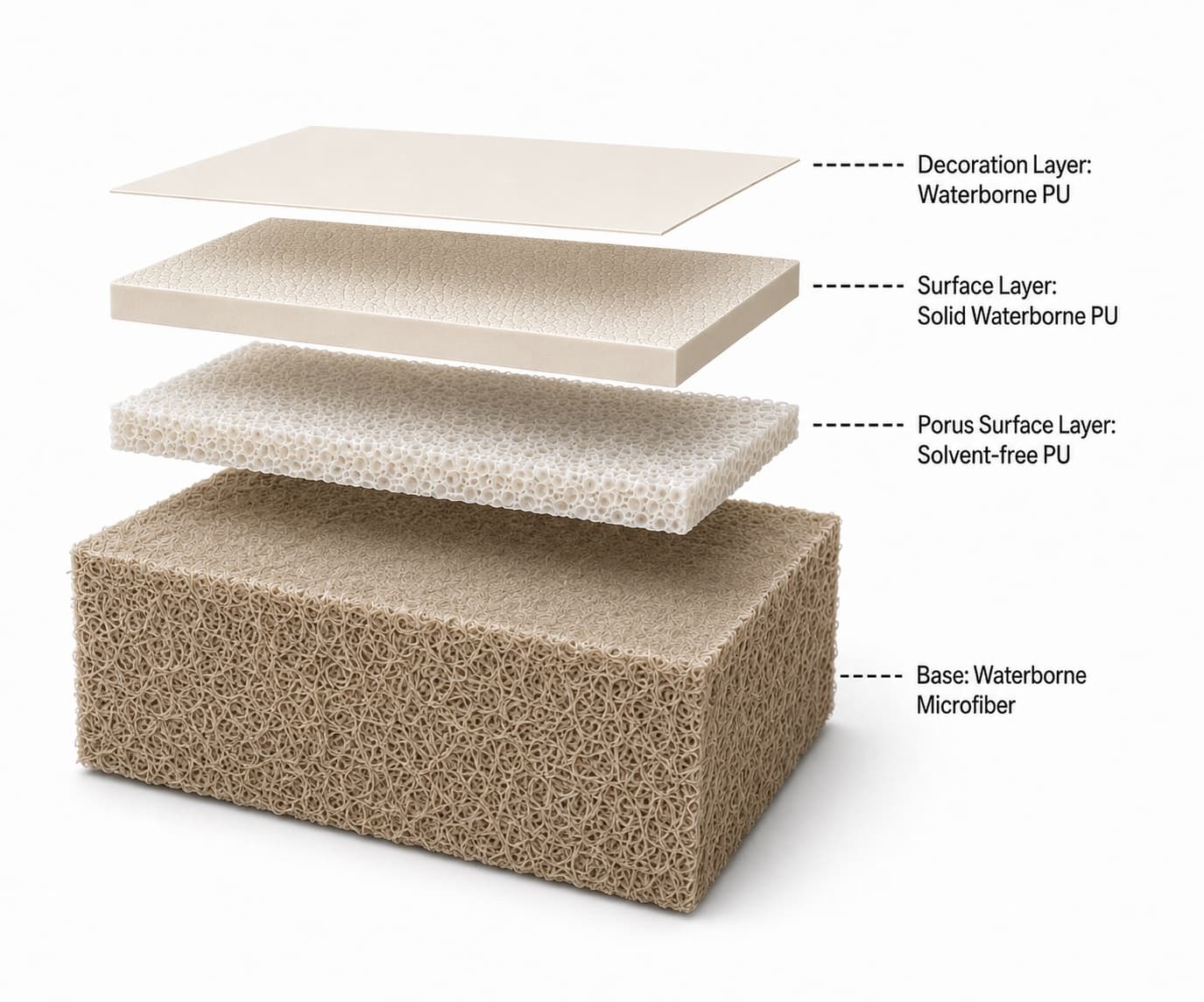
Aquapelle combines a strong waterborne microfiber base, a soft and flexible solvent-free porous interlayer, a stable solid waterborne PU surface, and a waterborne decoration layer that defines grain, gloss, colour, and tactile finish. The resulting material delivers tensile, tear, peel, abrasion, flex, UV, hydrolysis, and chemical resistance, while its micro-porous construction supports moisture transfer.
Colours, grains, gloss levels, hand feels, thicknesses, widths, backings, and surface treatments can be tailored to the programme. Recycled-content, bio-content, and silicone-surface pathways are also available subject to requirements. Primary uses include automotive seating, door and instrument panels, armrests, consoles, and steering wheels, with further possibilities across upholstered interiors, decorative panels, bags, accessories, protective surfaces, and selected consumer products. Each final specification is validated before production.